FOLLOW US:
  • Partnership
  • Events
  • Community
    • guests
    • members
    • ambassadoes
  • Advertising
  • Contact
TechvangArt
  • Art
  • Dialogues
  • OpportunitArt
  • Science and Art
  • Tech
TechvangArt
  • Futurist WorkoScope
  • Business
  • TVA Lab
    • If A Little Star….
    • TextStyle Apothecary
  • NewsMeme
opportunitart

Tokyu Corporation and Asahi Breweries to Sponsor NEWVIEW AWARDS 2024

by paradoxig 12th December 2024

Railway and beverage giants join 13 new partners from media, technology and creative industries to bring total number of NEWVIEW AWARDS 2024 partners to 20 companies

Tokyo, Japan – November 28, 2024 – NEWVIEW, a pioneering collaborative initiative led by STYLY, Inc., PARCO Co., Ltd., and Loftwork Inc., announced today that Tokyu Corporation and Asahi Breweries are now sponsors of the NEWVIEW AWARDS 2024, a global competition in which XR developers are awarded for their unique creations. With Tokyu and Asahi joining 13 new partners, NEWVIEW AWARDS 2024 now boasts a total of 20 partners spanning an array of industries.
Entries for NEWVIEW AWARDS 2024 will be accepted until Tuesday, December 17, 2024.

As a Platinum Sponsor, Tokyu Corporation will present the “TOKYU CORPORATION PRIZE.”   The award aims to inspire the development of use cases that bring cities to life through AR games.  Selected by judges on the Tokyu team, the award recipients will have the opportunity to collaborate with Tokyu Corporation on the creation of an AR game set in the lively streets of Shibuya, Tokyo, where Tokyu Corporation is headquartered.
As a Gold Sponsor, Asahi Breweries will present the ASAHI BREWERIES PRIZE.  The award  explores new co-creation possibilities between Asahi Breweries and XR creators who use cutting edge technology.  Award recipients will be able to collaborate with Asahi Breweries on the creation of XR content for pop-up stores and other marketing initiatives.

NEWVIEW’s New Partners

In addition to Tokyu Corporation and Asahi Breweries, NEWVIEW AWARDS 2024 has added 13 new partners to its partnership network.  NEWVIEW AWARDS 2024 now boasts a total of 20 collaborators from media, technology, and the creative industries.  New partners include:
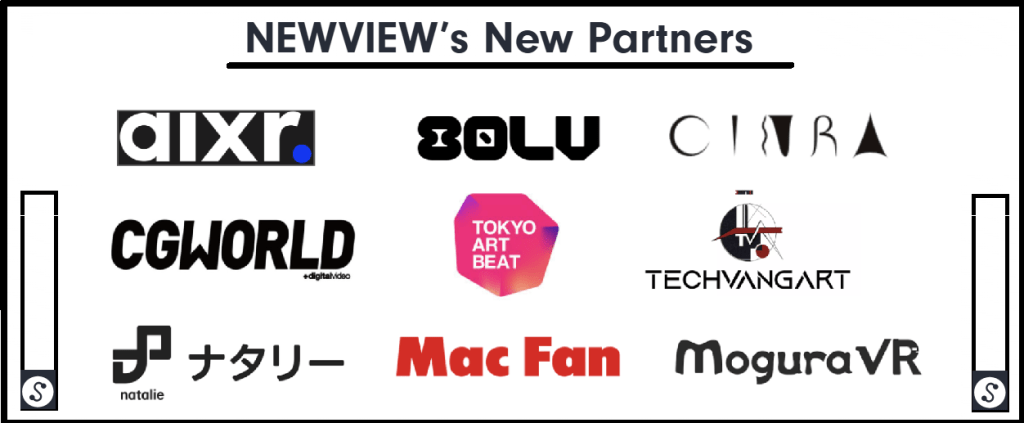
Announced Sponsors and Partners

About NEWVIEW AWARDS 2024

NEWVIEW AWARDS 2024’s mission is to discover and support next-generation artists and creators pioneering “super-experiential design.”  By fostering innovation in 3D spatial expressions, the awards have attracted 841 entries from 26 countries over the past six years, making the awards a key platform for emerging XR talent.  New to this year’s awards is the “Spatial Computing” category, which encourages the development of ground-breaking content for Apple Vision Pro and advancing spatial computing use cases.  To participate in NEWVIEW AWARDS, content must be created on the STYLY spatial layer platform.  For more information, visit: https://newview.design/AWARDS
Application Period:

  • Spatial Computing Category: Wednesday, August 21 2024 thru Wednesday, October 16 2024, 12:00 (UTC)
    ※ Applications requiring production support are now closed. For applicants who do not require production support, the deadline is Tuesday, December 17 2024 thru 12:00 (UTC).
  • Site-specific AR Category: Wednesday, August 21 2024 thru Tuesday, December 17, 2024, 12:00 (UTC)

Entry Forms:

  • Spatial Computing Category: https://awrd.com/award/newview2024-spatial-computing

  • Site-specific AR Category: https://awrd.com/award/newview2024-sitespecific-ar

About the NEWVIEW Project

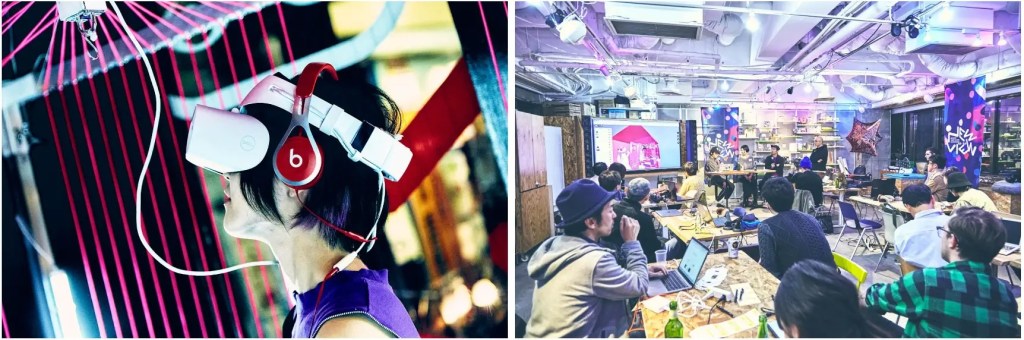
Launched in 2018, the NEWVIEW project fosters creativity and innovation in 3D spatial design. Through collaborations with creators in fashion, music, video, and art, the initiative bridges the gap between imagination and reality.  By hosting lectures and meetups globally, NEWVIEW supports the discovery and development of XR creators.  For more information, visit: https://newview.design/
About STYLY

STYLY, Inc. is the provider of STYLY, a spatial layer platform that connects the digital and physical worlds. With the mission of “unlocking humanity’s superpowers,” STYLY leverages XR-based technology to unleash the creative potential of individuals and organizations. By fostering the creation of new cultures and industries, STYLY aims to contribute to the evolution of humanity.
12th December 2024 0 comment
0 FacebookTwitterPinterestLinkedinRedditTelegramSkypeViberEmail
artopportunitart

NewImages Festival 2025: Open Call

by paradoxig 27th November 2024
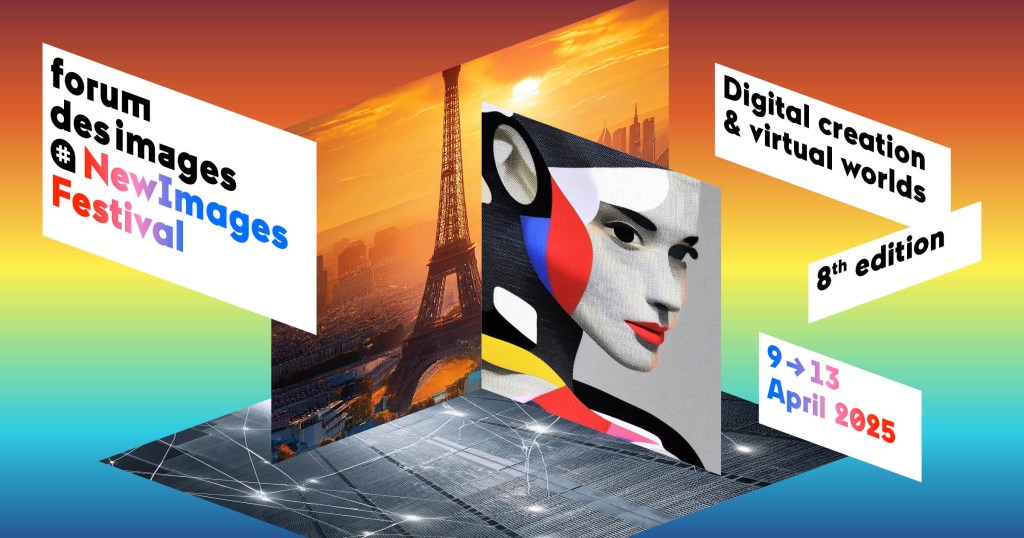
NewImages Festival is excited to welcome you to its 8th edition, taking place from April 9 to 13th, 2025,
at the Forum des images in Paris. 
Join our event 100% dedicated to immersive creation and virtual worlds by taking part in our international XR Competition
or by
registering your projects at the XR Development Market or XR Distribution Market.
With between 40 and 50 projects selected each year for the XR Development Market and over 60 for the XR Distribution Market, the XR Market showcases more than 100 projects each year.
This establishes it as the world’s largest market dedicated to immersive creation, offering unparalleled opportunities for financing, co-production, and distribution of XR projects.

Submit your projects now and take part in the NewImages Festival 2025, a unique opportunity to network and create international partnerships across all XR sectors: audiovisual, video games, museums, cultural venues, sound and the performing arts.
Key figures 2024:
+ 2,000 meetings
+ 80 speakers
150 producers
*48 countries represented
126 projects selected
160 Decision Makers 
900 accredited participants
+3,000 visitors
Calls for projects 2025
XR Competition
Showcase your bold, innovative projects in this international competition. From immersive video games to reinvented storytelling and daring VR/AR works, the immersive scene is waiting for you!All the works selected for the XR Competition are accessible to the general public free of charge.
 Open to any work:
Narrative and Immersive (XR, video games, film, virtual worlds, hybrid shows or any other innovative device) 
– Completed in 2024 or before March 2025 
– Competing for 3 prizes of between €3,000 and €6,000
 Register your project until December 31st, 2024 (11:59pm, GMT)
SUBMIT LEARN MORE
XR Distribution Market
Meet curators, distributors, programmers and buyers to expand your professional network and find new distribution opportunities.
 Open to all finalized project: 
– Immersive and Original (XR, video games, virtual worlds, hybrid shows or any other innovative device) 
– Finalised and Ready for distribution (online or physically) 
Register your project until January 15th, 2025 (11:59pm, GMT)
SUBMIT LEARN MORE
XR Development Market
Showcase your current projects and connect with potential partners, producers and investors to help finance and bring your project to fruition.
Open to any work project:  
– Immersive and original (XR, video games, virtual worlds, hybrid shows or any other innovative device) 
– In development (all stages)  
Register your project until January 15th, 2025 (11:59pm, GMT)
SUBMIT LEARN MORE

About NewImages Festival
Dedicated to digital creation and to virtual worlds, NewImages Festival combines a rich professional component with a program open to all audiences. With prizes at stake, its international XR competition is submitted to a jury of creators and professionals. Its XR Financing Market brings together leading actors in the XR industry around a selection of projects open to all immersive formats.
NewImages Festival is produced and organized by the Forum des images, the cultural institution of the
City of Paris, dedicated to cinema and digital creation.

Hosted by the Forum des images (a cultural institution subsidized by Paris City Hall), NewImages Festival was born in January 2018, when the Paris Virtual Film Festival (created in June 2016) and l Love Transmédia (launched in 2011) merged into a single entity.
Website: https://newimages-hub.com/en/about/

27th November 2024 0 comment
0 FacebookTwitterPinterestLinkedinRedditTelegramSkypeViberEmail
artnewsmeme

Floating Digital Art Exhibition

by paradoxig 25th November 2024

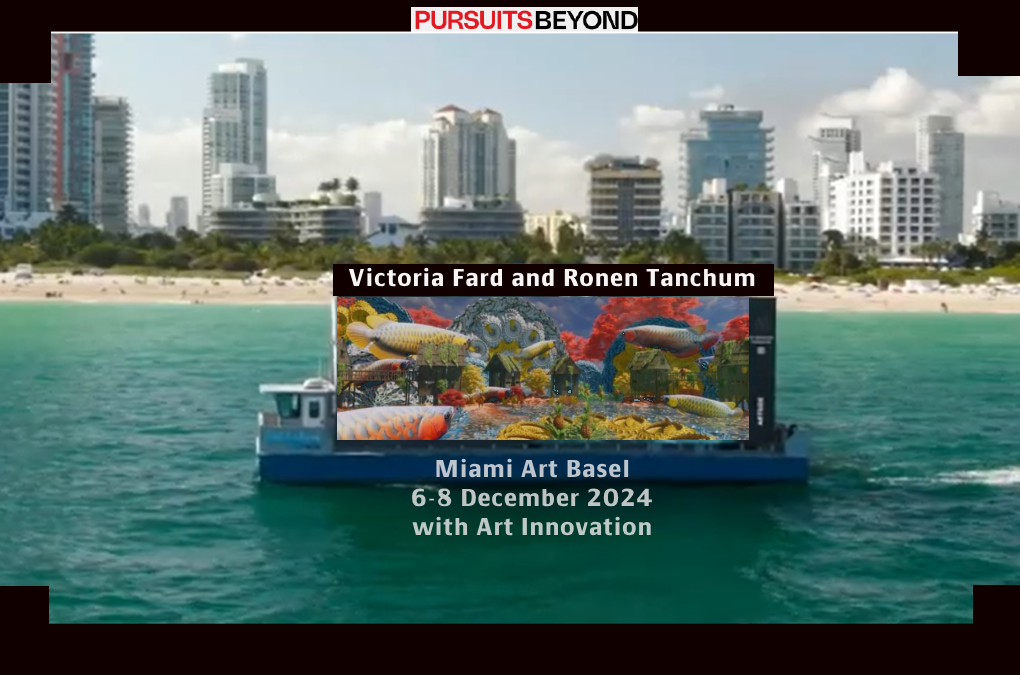
Pursuits Beyond and Art Innovation presents Victoria Fard and Ronen Tanchum, at Miami Art Basel between 6-8 December 2024

Pursuits Beyond is uniting with Art Innovation in an exciting large-format presentation of expanded visions, bringing international representation to Miami as a high-tech exhibition.
Featuring new work by digital artists Victoria Fard and Ronen Tanchum, a floating barge carrying an impressively sized LED wall will travel through Miami, enabling the Art Innovation exhibition to be visible from a wide radius, engaging more than 1.5 million viewers and offering an unparalleled opportunity for the public to immerse themselves in digital art amidst the Miami Cityscape.
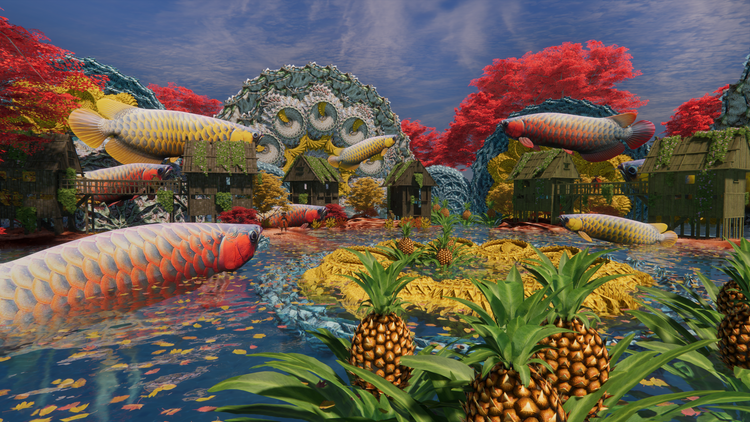
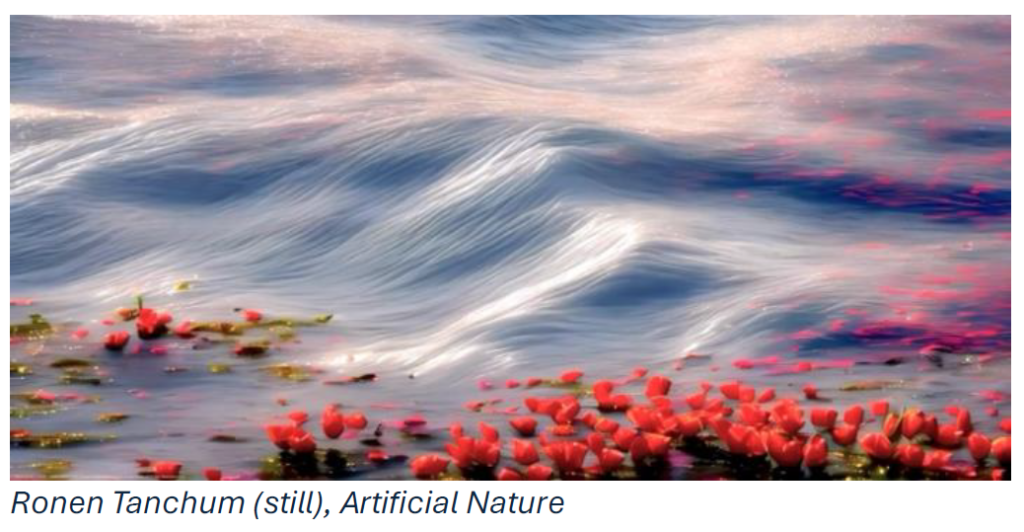
In Tanchum’s Carried Away, elements of nature are powered by AI’s interpretative capabilities, liberated from their physical confines into a dance of digital flora. Fard’s Papaya engages a surreal immersive world where nature’s elements sustain living creatures that bring a village to life.

PURSUITS BEYOND: A division of Pursuits Inc. Art Advisory, focuses on the unique intersections between art and technology that are expanding the dimensions of culture globally. Based between Toronto, New York and LA, Pursuits Beyond offers decades of professional histories working across the fine art and technology industries. With art at our core, we are dedicated to creating standout moments that elevate the experiences of audiences.
WEBSITE: https://pursuitsinc.com/agency/

VICTORIA FARD: An award-winning artist specializing in architecture, art and digital technologies. Fard’s imagined worlds present a visual and immersive experience that invites connection, exploration and reflection. Fard integrates elements produced with digital and generative tools to create fantastical 3D environments and materially-feasible sculptures.

Her work explores the themes of nature and heritage with the hope of preserving them and connecting people through immersive forms of storytelling. (photo represent a special piece named PAPAYA designed for an immersive 13 ft. tall by 60 ft. wide 3D LED Screen More about Victoria Fard’s art piece you can read here)
WEBSITE: https://www.victoriafard.com/about


RONEN TANCHUM: Visionary digital artist and technologist renowned for evocative work that transcends traditional boundaries by weaving together the spontaneity of natural processes with the algorithmic determinism of technology. Ronen’s installations and digital works are introspective, considering the similarities between biological evolution and machine learning and the intricate interplay of neural networks- humans, machines, and the environment.

Ronen has exhibited in galleries and institutions internationally and collaborates with the world’s most iconic brands, where his work is celebrated for its interactivity, depth and beauty.
WEBSITE: https://www.ronentanchum.art/about

ART INNOVATION is an international platform that combines art, technology and marketing to create innovative art events on a global scale.

Using the most advanced LED billboard technology, it transforms art exhibitions into immersive and engaging experiences, offering brands the opportunity to integrate themselves into these experiences to increase their visibility and connect meaningfully with an international audience.
WEBSITE: https://artinnovationgallery.com/

25th November 2024 0 comment
0 FacebookTwitterPinterestLinkedinRedditTelegramSkypeViberEmail
artInspiration of the week

Create the uncreated: AI’s Inspirational Origins

by paradoxig 20th October 2024

Art, existing for over 30,000 years, stands as one of humanity’s oldest triumphs of consciousness—an unparalleled expression of thought and creativity uniquely within the human

Relatively recently, technology has been integrated into this process—AI, or artificial intelligence, which mimics human thinking, generating a lot of ‘unique’ and non-unique, valuable and worthless artworks.

In our contemporary society and in our limited time, the evolution of art has taken a transformative turn with the start of the large-scale use of artificial intelligence (AI). We would probably have witnessed a completely different equation if the use of AI had been predominant for research and researchers, but it seems that the locomotive that wants to generate ideas and perhaps new cognitive processes can no longer stop the speed, but even more periodically increasing the speed.

…and as technology gets crazy, and it evolves, it evolves… people seem to be left in awe as in the story of Sleeping Beauty Only this time waiting for the prince generated by AI to come and wake her through a kiss, or some other form of artificial understanding, or maybe we’re waiting to implant a chip in Sleeping Beauty’s brain to figure out what she’s been dreaming about all this time?

However, we return the problem and dilemma of this artificial intellect despite the hype and mysticism that still surrounds artificial intelligence and its tools, at the moment they actually form an ethical and legal basis for technological novelty to smoothly enter everyday use.

The ability to train and re-train along completely different databases can give absolutely amazing results, and therefore new areas of its application. As algorithms increasingly influence how we perceive the world, the ways in which we begin to function and act could arouse curiosity, and even envy, for those following Pavlov’s experiments.

Imagine AI as the modern-day Pavlov, tinkering with our notions of creativity through systematic conditioning. Like Pavlov’s dogs, we, the artists and aficionados, find ourselves salivating over a new kind of stimulus—one generated not by instinct or inspiration alone but by meticulously coded algorithms.

Users engage in a perpetuum mobile cycle of registration, where each interaction births a novel algorithm endowed with its distinct conditioning.

And the technology that promises the huge advancements: the hand of tech-creation will evolve, from 8 fingers to 7 fingers, and then to 6 fingers, and Eureka, finally to a revelation-five (5) fingers on one hand! Such a historical progress… Previous-gen artists would be jealous, indeed. Ok, we have to give technology its merits: Who needs human intentionality when you have a supercomputer remixing centuries of artistic tradition?

The question reverberates through the corridors of creative discourse, challenging us to reconsider the boundaries of human ingenuity and the role of technology therein.

Human civilization has continuously adapted its collective aesthetic sensibilities in response to technological advances, permanently redefining what constitutes artistic excellence as new tools emerge. It is very clear our future aesthetic preferences will differ significantly from today’s.

Claims that core values in art appreciation will remain steadfast, emphasizing enduring qualities that transcend technological change are clear speculation. Moreover, the advancement of technology is redefining our perceptions of simplicity and complexity in art. What once required complex human skills and emotional depth can now be executed with computational precision.

The art undergoes a profound transformation in the face of technological innovation and also the criteria for discerning artistic merits evolve alongside AI capabilities, prompting a reassessment of traditional hierarchies in the art world.

And yes, we live that time in which art makes us argue, worry, wonder, admire and sincerely rebel. But does it leave us indifferent? Far from it.

We find ourselves at a crossroads in which our minds think often unanswered questions, because predictions, probabilities are also changing. so, what do we have to do?

Amidst this uncertainty, one certainty prevails: the ongoing AI experimentation within the forms of art carries profound implications for both creativity and culture.

Given my preference against using the term “AI revolution in art,” I propose adopting the paradigm of AI’s transformative effect on art, signalling a significant shift with profound implications for creativity and cultural dialogue. This paradigm invites exploration into novel collaborations or new partnerships between humans and machines, in order to discover and creating uncreated vision. I could say create the uncreated.

20th October 2024 0 comment
0 FacebookTwitterPinterestLinkedinRedditTelegramSkypeViberEmail
tech

New 3D Printing Technique

by paradoxig 14th October 2024

By using a 3D printer like an iron, researchers can precisely control the color, shade, and texture of fabricated objects, using only one material
Multimaterial 3D printing enables makers to fabricate customized devices with multiple colors and varied textures. But the process can be time-consuming and wasteful because existing 3D printers must switch between multiple nozzles, often discarding one material before they can start depositing another.

Researchers from MIT and Delft University of Technology have now introduced a more efficient, less wasteful, and higher-precision technique that leverages heat-responsive materials to print objects that have multiple colors, shades, and textures in one step.

Their method, called speed-modulated ironing, utilizes a dual-nozzle 3D printer. The first nozzle deposits a heat-responsive filament and the second nozzle passes over the printed material to activate certain responses, such as changes in opacity or coarseness, using heat.

https://www.youtube.com/watch?v=PvrU1Aw2KP0&t=1s


By controlling the speed of the second nozzle, the researchers can heat the material to specific temperatures, finely tuning the color, shade, and roughness of the heat-responsive filaments. Importantly, this method does not require any hardware modifications.

The researchers developed a model that predicts the amount of heat the “ironing” nozzle will transfer to the material based on its speed. They used this model as the foundation for a user interface that automatically generates printing instructions which achieve color, shade, and texture specifications.

One could use speed-modulated ironing to create artistic effects by varying the color on a printed object. The technique could also produce textured handles that would be easier to grasp for individuals with weakness in their hands.

“Today, we have desktop printers that use a smart combination of a few inks to generate a range of shades and textures. We want to be able to do the same thing with a 3D printer — use a limited set of materials to create a much more diverse set of characteristics for 3D-printed objects,” says Mustafa Doğa Doğan PhD ’24, co-author of a paper on speed-modulated ironing.

This project is a collaboration between the research groups of Zjenja Doubrovski, assistant professor at TU Delft, and Stefanie Mueller, the TIBCO Career Development Professor in the Department of Electrical Engineering and Computer Science (EECS) at MIT and a member of the MIT Computer Science and Artificial Intelligence Laboratory (CSAIL). Doğan worked closely with lead author Mehmet Ozdemir of TU Delft; Marwa AlAlawi, a mechanical engineering graduate student at MIT; and Jose Martinez Castro of TU Delft. The research will be presented at the ACM Symposium on User Interface Software and Technology.

Modulating speed to control temperature

The researchers launched the project to explore better ways to achieve multiproperty 3D printing with a single material. The use of heat-responsive filaments was promising, but most existing methods use a single nozzle to do printing and heating. The printer always needs to first heat the nozzle to the desired target temperature before depositing the material.

However, heating and cooling the nozzle takes a long time, and there is a danger that the filament in the nozzle might degrade as it reaches higher temperatures.

To prevent these problems, the team developed an ironing technique where material is printed using one nozzle, then activated by a second, empty nozzle which only reheats it. Instead of adjusting the temperature to trigger the material response, the researchers keep the temperature of the second nozzle constant and vary the speed at which it moves over the printed material, slightly touching the top of the layer.

Animation of rectangular iron sweeping top layer of printing block as infrared inset shows thermal activity.
In speed-modulated ironing, the first nozzle of a dual-nozzle 3D printer deposits a heat-responsive filament and then the second nozzle passes over the printed material to activate certain responses, such as changes in opacity or coarseness, using heat.

“As we modulate the speed, that allows the printed layer we are ironing to reach different temperatures. It is similar to what happens if you move your finger over a flame. If you move it quickly, you might not be burned, but if you drag it across the flame slowly, your finger will reach a higher temperature,” AlAlawi says.

The MIT team collaborated with the TU Delft researchers to develop the theoretical model that predicts how fast the second nozzle must move to heat the material to a specific temperature.

The model correlates a material’s output temperature with its heat-responsive properties to determine the exact nozzle speed which will achieve certain colors, shades, or textures in the printed object.

“There are a lot of inputs that can affect the results we get. We are modeling something that is very complicated, but we also want to make sure the results are fine-grained,” AlAlawi says.

The team dug into scientific literature to determine proper heat transfer coefficients for a set of unique materials, which they built into their model. They also had to contend with an array of unpredictable variables, such as heat that may be dissipated by fans and the air temperature in the room where the object is being printed.

They incorporated the model into a user-friendly interface that simplifies the scientific process, automatically translating the pixels in a maker’s 3D model into a set of machine instructions that control the speed at which the object is printed and ironed by the dual nozzles.

Faster, finer fabrication

They tested their approach with three heat-responsive filaments. The first, a foaming polymer with particles that expand as they are heated, yields different shades, translucencies, and textures. They also experimented with a filament filled with wood fibers and one with cork fibers, both of which can be charred to produce increasingly darker shades.

The researchers demonstrated how their method could produce objects like water bottles that are partially translucent. To make the water bottles, they ironed the foaming polymer at low speeds to create opaque regions and higher speeds to create translucent ones. They also utilized the foaming polymer to fabricate a bike handle with varied roughness to improve a rider’s grip.

Trying to produce similar objects using traditional multimaterial 3D printing took far more time, sometimes adding hours to the printing process, and consumed more energy and material. In addition, speed-modulated ironing could produce fine-grained shade and texture gradients that other methods could not achieve.

In the future, the researchers want to experiment with other thermally responsive materials, such as plastics. They also hope to explore the use of speed-modulated ironing to modify the mechanical and acoustic properties of certain materials.

Source: MIT News

14th October 2024 0 comment
0 FacebookTwitterPinterestLinkedinRedditTelegramSkypeViberEmail
tech

The Art of the Enzyme

by paradoxig 14th October 2024

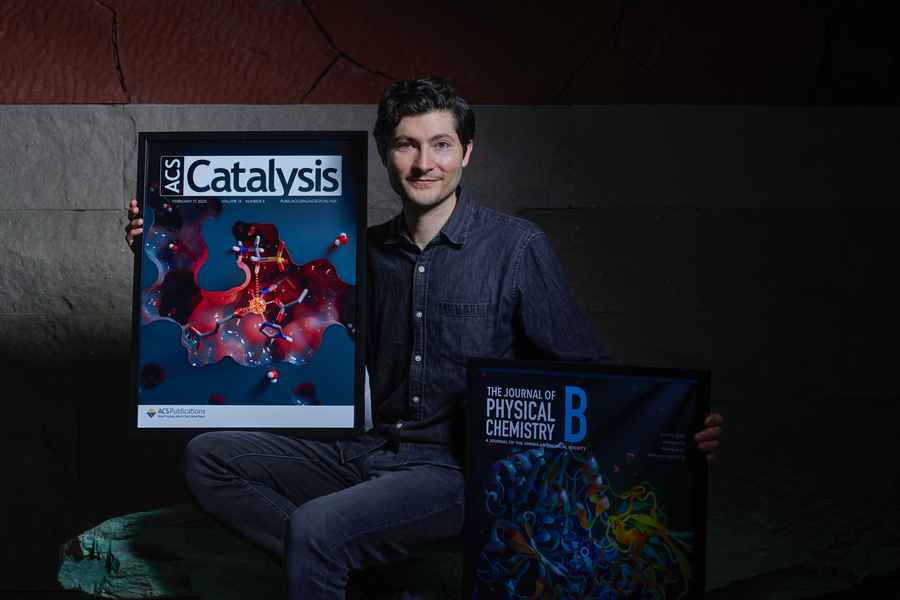
Bioengineer and artist David Kastner seeks to unlock the secrets of catalysis and improve science communication through eye-catching visuals.

As the mountains and trees of California’s Napa Valley drift past the car window, 6-year-old David Kastner is deep in conversation with his father. The conversation is a familiar one, shifting naturally from gravity to electromagnetism. For as long as he can remember, scientific curiosity has been a key part of his conversations on these drives.

“I remember being fascinated by how complex the universe is and how little people know about it,” recalls Kastner, now a fourth-year PhD student in biological engineering. “I always wanted to uncover new truths about the universe.”

Nearly two decades later, Kastner is now at MIT studying a challenging subset of proteins known as metalloenzymes, in the lab of Heather Kulik, a professor of chemical engineering, and Forest White, a professor of biological engineering. With the same curiosity that sparked those on-the-road discussions with his father, Kastner is motivated by a desire to harness the chemical and medical potential of enzymes through computational and mechanistic approaches.

Kastner’s research aims to uncover the fundamental blueprints of reactivity for enzymes using state-of-the-art computational methods. However, his approach to research involves not just physics, chemistry, and biology, but also art, which has been an integral part of his life since childhood. Kastner produces beautiful 3D illustrations of molecular systems that help make his research more accessible to a wider audience.

“Seeing the science in a way that looks so real that you feel like you can touch it can be more impactful than a bar plot or a histogram,” he says. “If scientists were more invested in showing their work in engaging and interesting ways, then we would have more people involved in science.”

Form and function in equal measure

Kastner’s research has spanned quantum chemistry calculations, protein engineering, bioinformatics, synthetic organic chemistry, and mammalian tissue models. He earned his bachelor’s degree in biophysics at Brigham Young University, and once he began his PhD program at MIT, he decided to zero in on metalloenzymes.

Among metalloenzymes, Kastner has chosen to focus on high-valent metalloenzymes, which contain a highly reactive metal atom that has lost many of its electrons and eagerly reacts to regain them. His personal favorites are non-heme iron enzymes, due to their vast repertoire of chemical reactions, direct applicability to human health, and the tunability of their active sites for engineering novel reactivities.

Giving old enzymes new reactivities isn’t easy, however. His first published paper, authored alongside former members of the Kulik Research Group, showed why.

Kastner’s research explores the mechanistic differences between non-heme iron halogenases and hydroxylases, two classes of high-valent enzymes that activate normally unreactive C–H bonds. By investigating trends across structural databases and molecular dynamics simulations, he identified key interactions that result in subtle differences in the substrate positioning angle, influencing reactivity. Kastner’s computational findings suggest new ways of converting between halogenases and hydroxylases.

While an intuition of an enzyme’s structure can go a long way, sometimes you need to move beyond structure. “As soon as you add a metal into the core of an enzyme, it becomes much more challenging to model,” he says. “It requires unique and cutting-edge tools in order to understand reactivity. That’s why we need quantum chemistry calculations so much in our research.”

Trying to unlock the secrets of nature’s most efficient catalysts requires observations at the sharpest level possible. A given enzyme’s structure and reactivity is determined by the interactions between the electrons it contains, hence the reliance on quantum computing methods.

The importance of viewing the entire enzyme from a quantum mechanical lens came to the forefront of Kastner’s research in his most recent publication. Kastner and his collaborators discovered that the reactivity of a class of miniature artificial metalloenzymes was controlled by changes in dynamic charge distributions, which can be thought of as a way of seeing how electrons and charges fluctuate throughout an enzyme’s structure.

“If you’re interested in how life functions, then it only makes sense to look at enzymes and proteins,” he says. “Enzymes are the machinery that evolution came up with to harness physics and chemistry.”

“I’ve always been interested in that question,” he continues. “How do you get from these purely mathematical underlying physical laws to living, breathing organisms with feelings?”

The art of science

In addition to research, Kastner can be found using 3D graphics programs like Blender and VMD to visualize macromolecular systems and their interactions. His work can be seen on the covers of scientific journals published by Nature and the American Chemical Society, but his initial forays into art were far simpler.

“I would draw everything,” he says. “It was the game I would play. I would draw; I would ask my parents to draw for me; I would ask people I would meet, ‘Can you draw this for me?’”

His mother made hyperrealistic art inspired by nature and was the biggest artistic influence on him early on. Kastner described a photorealistic lynx his mother drew with a scratch board hanging at his grandparents’ home that he found particularly inspiring as a child.

He took traditional art quite seriously in high school. He worked with charcoal and oils, winning multiple competitions, but he wasn’t sure how he might apply these skills to his academic interests.

“At that time, I hadn’t realized how to reconcile art and my love of science,” he says. “They still felt so different and no one I talked to tried to combine them at all.”

If he had come of age in late-15th-century Italy, however, that might not have been the case. The Renaissance was defined by figures who didn’t see boundaries between various disciplines, and perhaps none are more enduring than Kastner’s favorite scientist of all time: Leonardo da Vinci.

“It’s pretty incredible that the man who is universally credited as being the grandfather of modern anatomy and physiology is also the same man who painted the ‘Mona Lisa,’” he says. “I feel like the world would be a better place if we had more people like da Vinci who could reconcile the sciences and art.”

In fact, he thinks the erosion of trust in scientists could be eased if that were the case. Peer-reviewed papers are dense and technical because they need to describe complex experiments in a way that makes their results reproducible, but that means the average person probably won’t understand it. That’s where art can help bridge the gap.

“If we communicate our science in ways that connect to ordinary people, I think it will automatically get rid of some of that distrust,” he says. “We need to keep writing papers the way we do; there’s no way around that. However, scientific art can help make this information more accessible. By converting esoteric data into familiar and relatable visuals, researchers can extend an invitation to people of all ages and backgrounds to interact with their science through the universally shared language of art.”

Source: MIT News, Credits Photo: Jared Charney

14th October 2024 0 comment
0 FacebookTwitterPinterestLinkedinRedditTelegramSkypeViberEmail
tech

Designing for outer space

by paradoxig 24th August 2024

With NASA planning permanent bases in space and on the moon, MIT students develop prototypes for habitats far from planet Earth.

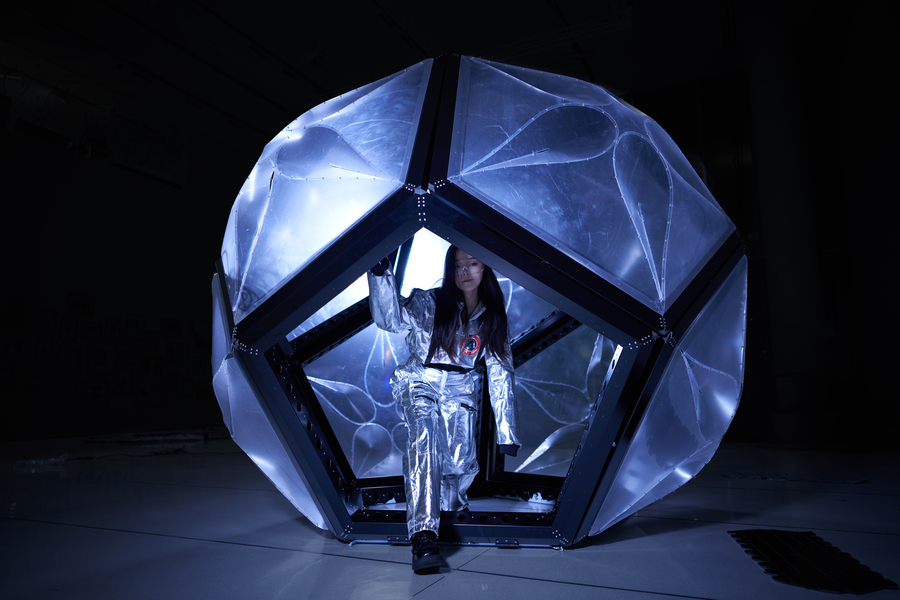
A new MIT course this spring asked students to design what humans might need to comfortably work in and inhabit space. The time for these creations is now. While the NASA Apollo missions saw astronauts land on the moon, collect samples, and return home, the missions planned under Artemis, NASA’s current moon exploration program, include establishing long-term bases in orbit as well as on the surface of the moon.

The cross-disciplinary design course MAS.S66/4.154/16.89 (Space Architectures) was run in parallel with the departments of Architecture, and Aeronautics and Astronautics (AeroAstro), and the MIT Media Lab’s Space Exploration Initiatives group. Thirty-five students from across the Institute registered to imagine, design, prototype, and test what might be needed to support human habitation and activities on the moon.

The course’s popularity was not surprising to the instructors.

“A lot of students at MIT are excited about space,” says Jeffrey Hoffman, one of the course instructors and professor of the practice in AeroAstro. Before teaching at MIT, Hoffman was a NASA astronaut who flew five missions aboard the space shuttle. “Certainly in AeroAstro, half the students want to be astronauts eventually, so it’s not like they hadn’t thought about living in space before. This was an opportunity to use that inspiration and work on a project that might become an actual design for real lunar habitats.”

Video thumbnailPlay video

MIT’s history with NASA, and with the Apollo missions in particular, is well documented. NASA’s first major contract for the Apollo program was awarded to MIT in 1961. Dava Newman, director of the MIT Media Lab and former NASA deputy administrator, was also a course instructor.

Preparing students for the next phase of working and living in space was the goal of this class. In addition to the Artemis missions, the rise of commercial spaceflight foretells the need to investigate these designs.

“MIT Architecture has always succeeded best at the intersection of research and practice,” says Nicholas de Monchaux, a course instructor and architecture department head. “With more and more designers being called on to design for extreme environments and conditions — including space — we see an important opportunity for research, collaboration, and new forms of practice, including an ongoing collaboration with the Media Lab and AeroAstro on designing for extreme environments.”

Designing lunar habitats

A defining aspect of the class is the blend of architecture and engineering students. Each group brought different mindsets and approaches to the questions and challenges put before them. Shared activities, guest lectures, and a week touring NASA’s Johnson Space Center in Houston, Texas; the SpaceX launch facility in Brownsville, Texas; and ICON’s 3D printing facilities for construction in Austin, Texas, provided the students with an introduction to teams already working in this field. Paramount among their lessons: an understanding of the harsh environments for which they will be designing.

Hoffman doesn’t sugarcoat what life in space is like.

“Space is one of the most hostile environments you can imagine,” he says. “You’re sitting inside a spacecraft looking out the window, realizing that on the other side of that window, I’d be dead in a few seconds.”

The students were divided into seven teams to develop their projects, and the value of collaboration quickly became apparent. The teams began with a concept phase where the visions of the architects — whose impulse was to create a comfortable and livable habitat — sometimes conflicted with those of the engineers, who were more focused on the realities of the extreme environment.

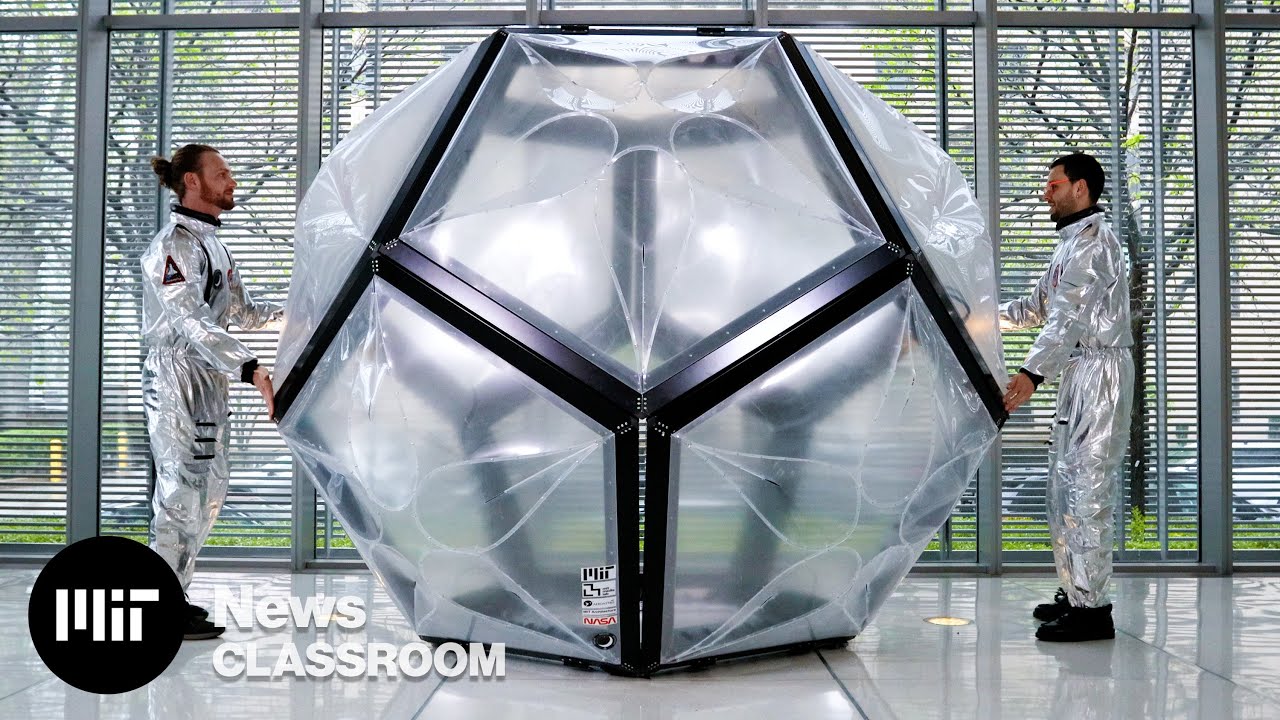
Inflatable designs emerged in several projects: a modular inflatable mobile science library that could support up to four people; an inflatable habitat that can be deployed within minutes to provide short-term shelter and protection for a crew on the moon; and a semi-permanent in situ habitat for space exploration ahead of an established lunar base.

Finding a common language

“Architects and engineers tend to approach the design process differently,” says Annika Thomas, a mechanical engineering doctoral student and member of the MoonBRICCS team. “While it was a challenge to integrate these ideas early on, we found ways over time to communicate and coordinate our ideas, brought together by a common vision for the end of the project.”

Thomas’s teammates, architecture students Juan Daniel Hurtado Salazar and Mikita Klimenka, say that technical considerations in architecture are often resolved toward the middle and end of a project.

“This gives us too much space to put off the implications of our design decisions while leaving little time to resolve them,” says Salazar. “The insight of our engineers challenged every design decision from the onset with mechanical, economic, and technological implications of current space technology and material regimes. It also provided a fruitful arena to cooperatively discuss the concern that the most materially and economically optimal solutions are not always the most culturally or morally justified, as the emergence of long-term habitats brings the full gamut of an astronaut’s functional, social, and emotional needs to the forefront.”

Says Klimenka, “The wealth of knowledge and experience present within the team allowed us to meaningfully consider possible responses to producing a viable long-term habitat. While navigating both engineering and design constraints certainly required additional effort, the thinking process overall was extremely refreshing as we exposed ourselves to totally different sets of challenges that we do not typically deal with in our domains.”

Architecture graduate student Kaicheng Zhuang, who worked with engineers on the Lunar Sandbags project, says communication skills were “crucial” to the team working successfully together.

“With the engineers, it’s essential to focus on the technical feasibility and practical implementation, making sure every design element can be realistically achieved,” says Zhuang. “They needed clear, precise information about structural integrity, material properties, and functionality. On the other hand, within our architecture team, discussions often revolve around the conceptual and aesthetic aspects, such as the visual impact, spatial dynamics, and user experience.”

Molly Johnson, an AeroAstro graduate student and team member on the lunarNOMAD project, concurs. “Traditionally, for a systems engineer such as myself it is easy to wave away the small design details and say they’ll be addressed without going into detail about how they’ll be addressed. The architects brought in a new level of detail that helped clarify our intentions.”

The team behind Momo: a Self-Assembling Lunar Habitat created a mission profile for their design. The semi-permanent in situ habitat was designed for space exploration ahead of establishing a permanent base on the moon. The module is flexible enough to fold nearly flat for easy transport. Their project was recently profiled in DesignBoom.

Beyond Earth

The final projects showed the vast differences among the teams despite there being a “limited number of ways that you can actually keep people alive on the lunar surface,” says Cody Paige, director of Space Exploration Initiatives and a course instructor. Students needed to consider what types of materials were needed; how these would be transported and assembled; how long their structures would remain functional; and what social or human experience would be supported, among other concerns.

The hands-on experience to create life-size models was especially important in this course given that AI is becoming a larger component of so many tasks and areas of decision-making, according to Paige.

“A computer doesn’t always translate exactly into the real world, and so having the students make prototypes shows them that there is a lot of benefit in understanding the materials you’re working with, how they function in real life, and the tactile ability that you can gather by working with these materials,” says Paige.

As fantastical as some of the projects appeared — with their combination of architecture, engineering, and design — they may very well be viable soon, especially as more architects are hired to design for space and students are understanding the landscape and needs for the demanding environments.

“We need to train our students to be the pioneers at the forefront of this field,” says Skylar Tibbits, a professor in the architecture department and one of the course instructors. “The longer astronauts are in space or on the moon, we need to be designing habitats for human experiences that people will want to live in for a long time.”

The need for architects and engineers skilled in this specific field is thriving. Thomas — the engineering student on the MoonBRICCS team — is currently working on robotics for space application. Her teammate — Palak Patel — is an engineering doctoral student working on extreme environment materials for space applications. With the enthusiasm of the students, as well as the considerable real-world occupational need, the three academic units plan to continue to offer the course in the future.

“We see extending this into a multi-year program in designing for extreme environments — in space and on Earth — and are actively discussing sponsorships and partnerships,” says de Monchaux.

Source: MIT News Photo: MIT, Chenyue “xdd44” Dai

24th August 2024 0 comment
0 FacebookTwitterPinterestLinkedinRedditTelegramSkypeViberEmail
tech

When to trust an AI model

by paradoxig 24th August 2024

More accurate uncertainty estimates could help users decide about how and when to use machine-learning models in the real world.

Because machine-learning models can give false predictions, researchers often equip them with the ability to tell a user how confident they are about a certain decision. This is especially important in high-stake settings, such as when models are used to help identify disease in medical images or filter job applications.

But a model’s uncertainty quantifications are only useful if they are accurate. If a model says it is 49 percent confident that a medical image shows a pleural effusion, then 49 percent of the time, the model should be right.

MIT researchers have introduced a new approach that can improve uncertainty estimates in machine-learning models. Their method not only generates more accurate uncertainty estimates than other techniques, but does so more efficiently.

In addition, because the technique is scalable, it can be applied to huge deep-learning models that are increasingly being deployed in health care and other safety-critical situations.

This technique could give end users, many of whom lack machine-learning expertise, better information they can use to determine whether to trust a model’s predictions or if the model should be deployed for a particular task.

“It is easy to see these models perform really well in scenarios where they are very good, and then assume they will be just as good in other scenarios. This makes it especially important to push this kind of work that seeks to better calibrate the uncertainty of these models to make sure they align with human notions of uncertainty,” says lead author Nathan Ng, a graduate student at the University of Toronto who is a visiting student at MIT.

Ng wrote the paper with Roger Grosse, an assistant professor of computer science at the University of Toronto; and senior author Marzyeh Ghassemi, an associate professor in the Department of Electrical Engineering and Computer Science and a member of the Institute of Medical Engineering Sciences and the Laboratory for Information and Decision Systems. The research will be presented at the International Conference on Machine Learning.

Quantifying uncertainty

Uncertainty quantification methods often require complex statistical calculations that don’t scale well to machine-learning models with millions of parameters. These methods also require users to make assumptions about the model and data used to train it.

The MIT researchers took a different approach. They use what is known as the minimum description length principle (MDL), which does not require the assumptions that can hamper the accuracy of other methods. MDL is used to better quantify and calibrate uncertainty for test points the model has been asked to label.

The technique the researchers developed, known as IF-COMP, makes MDL fast enough to use with the kinds of large deep-learning models deployed in many real-world settings.

MDL involves considering all possible labels a model could give a test point. If there are many alternative labels for this point that fit well, its confidence in the label it chose should decrease accordingly.

“One way to understand how confident a model is would be to tell it some counterfactual information and see how likely it is to believe you,” Ng says.

For example, consider a model that says a medical image shows a pleural effusion. If the researchers tell the model this image shows an edema, and it is willing to update its belief, then the model should be less confident in its original decision.

With MDL, if a model is confident when it labels a datapoint, it should use a very short code to describe that point. If it is uncertain about its decision because the point could have many other labels, it uses a longer code to capture these possibilities.

The amount of code used to label a datapoint is known as stochastic data complexity. If the researchers ask the model how willing it is to update its belief about a datapoint given contrary evidence, the stochastic data complexity should decrease if the model is confident.

But testing each datapoint using MDL would require an enormous amount of computation.

Speeding up the process

With IF-COMP, the researchers developed an approximation technique that can accurately estimate stochastic data complexity using a special function, known as an influence function. They also employed a statistical technique called temperature-scaling, which improves the calibration of the model’s outputs. This combination of influence functions and temperature-scaling enables high-quality approximations of the stochastic data complexity.

In the end, IF-COMP can efficiently produce well-calibrated uncertainty quantifications that reflect a model’s true confidence. The technique can also determine whether the model has mislabeled certain data points or reveal which data points are outliers.

The researchers tested their system on these three tasks and found that it was faster and more accurate than other methods.

“It is really important to have some certainty that a model is well-calibrated, and there is a growing need to detect when a specific prediction doesn’t look quite right. Auditing tools are becoming more necessary in machine-learning problems as we use large amounts of unexamined data to make models that will be applied to human-facing problems,” Ghassemi says.

IF-COMP is model-agnostic, so it can provide accurate uncertainty quantifications for many types of machine-learning models. This could enable it to be deployed in a wider range of real-world settings, ultimately helping more practitioners make better decisions.

“People need to understand that these systems are very fallible and can make things up as they go. A model may look like it is highly confident, but there are a ton of different things it is willing to believe given evidence to the contrary,” Ng says.

In the future, the researchers are interested in applying their approach to large language models and studying other potential use cases for the minimum description length principle. 

Source: MIT News

24th August 2024 0 comment
0 FacebookTwitterPinterestLinkedinRedditTelegramSkypeViberEmail
art

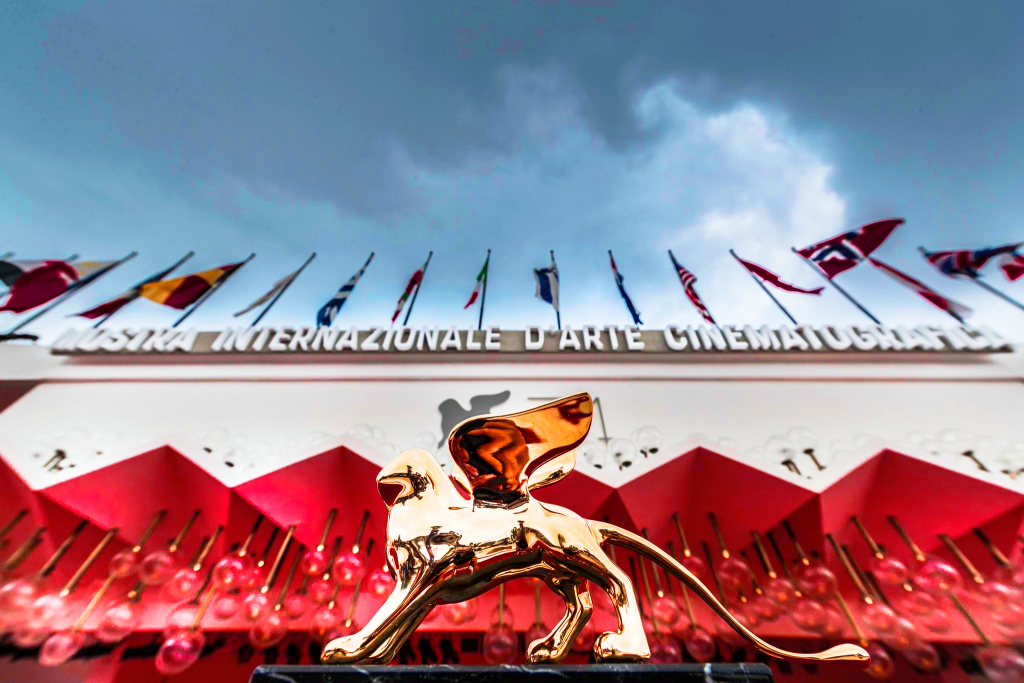
Venice Film Festival 2024: A Global Stage for Cinematic Excellence

by paradoxig 21st August 2024

The organizers of the 81st Venice Film Festival announced the full program with the event scheduled to run from August 28th to September 7th.

THE MAIN COMPETITION features films by Todd Phillips (“Joker: Folie à Deux”), Pablo Larraín (“Maria”), Pedro Almodóvar (“The Room Next Door”), Justin Kurzel (“Silent Brotherhood”), as well as new works by Dea Kulumbegashvili (“April”) and Brady Corbet (“The Brutalist”). The festival promises a vibrant reception and the presence of the most famous Hollywood stars on the red carpet: Tilda Swinton, Joaquin Phoenix and Lady Gaga, Angelina Jolie, Jude Law, and other artists star in the competition films.

The 81st Venice Film Festival will open with the sequel to the 1988 hit “Beetlejuice” by Tim Burton, starring Michael Keaton, Winona Ryder, Monica Bellucci, Jenna Ortega, and Willem Dafoe.

The out-of-competition program also includes “Broken Fury” and “Cloud” by Japanese filmmakers Takeshi Kitano and Kiyoshi Kurosawa, and the comedy “Finale” by French filmmaker Claude Lelouch.

The comedy action film “Wolves” by John Watts will feature Brad Pitt and George Clooney. The festival will close with another out-of-competition film, “L’Orto Americano” by director Giuseppe (Pup) Avati.

The film festival, known as a springboard to the Oscars, is once again hosting Todd Phillips and his “Joker,” which won the Golden Lion in 2019. The sequel “Folie à Deux,” starring Joaquin Phoenix and Lady Gaga, is also vying for the top prize.

Luca Guadagnino will bring to the festival a film adaptation of William S. Burroughs’ novel. “Queer” stars Daniel Craig as an American expatriate with a heroin addiction in Mexico. Spanish filmmaker Pedro Almodóvar presents “The Room Next Door,” featuring Oscar winners Tilda Swinton and Julianne Moore.

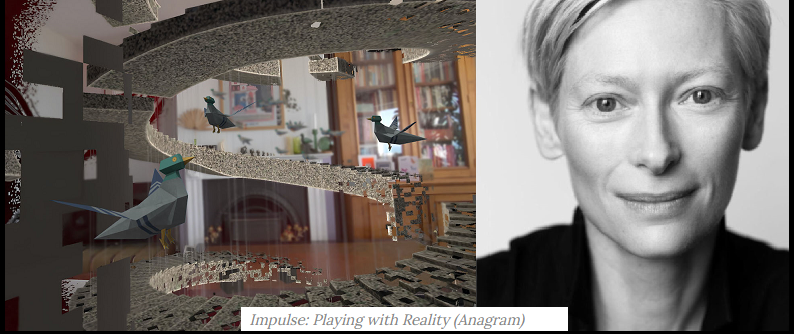
Additionally, Academy Award-winning actress Tilda Swinton will be present at the Venice Immersive program, narrating the VR documentary “Impulse: Playing with Reality,” premiering at the Venice Immersive program in 2024. This is her second collaboration with the “Playing with Reality” collection, following her narration of the 2021 VR film “Goliath.”

The documentary is a co-production of Floréal and France Télévisions, and was supported by various organizations including the Tides Foundation’s Unity Charitable Fund, France Télévisions, CNC, Agog, and Meta VR for Good.

THE SERIES PROGRAM will feature Alfonso Cuarón’s Apple TV+ project “Disclaimer” starring Cate Blanchett, who plays a journalist who finds herself the subject of a journalistic story. Joe Wright will bring the story of Benito Mussolini’s rise to power with “M. Son of the Century.” The “Horizons” program will include Alexandros Avranas’ drama “Silent Life,” starring Chulpan Khamatova and Grigory Dobrygin.

THE MAIN COMPETITION JURY will be chaired by French actress Isabelle Huppert. The films will also be judged by directors Agnieszka Holland, James Gray, Andrew Haigh, Kleber Mendonça Filho, Abderrahmane Sissako, Giuseppe Tornatore, Julia von Heinz, and Chinese actress Zhang Ziyi.

French filmmakers are also included in the competition program: director Emmanuel Mouret with the comedy “Three Friends,” Ludovic and Zoran Bukerma with the coming-of-age drama “Their Children After Them,” sisters Delphine and Muriel Coulin with the drama “Silent Son” set in the 1950s and starring Vincent Lindon (“Titan”). Claude Lelouch will present the comedy “Finale” out of competition, about a man who embarks on the most important journey of his life.

The Italian segment is represented by five diverse films, besides Luca Guadagnino. Gianni Amelio will bring “Battlefield” about World War I. Fabio Grassadonia and Antonio Piazza will present “Sicilian Letter” about the “last godfather,” “Cosa Nostra” boss Matteo Messina Denaro. Director Giulia Louise Steigerwalt will showcase “Diva Futura” about a Roman porn studio from the 1980s, which produced politician Ilona Staller (Cicciolina).

Masterclasses and Conversations program

Schedule of Masterclasses and Conversations at the Match Point Arena at the Lido (Lungomare Marconi, corner via Emo, in front of the Hotel Exclesior), for accredited persons, no reservation required:

Thursday 29 August
4.30 pm Masterclass with Sigourney Weaver (Golden Lion for Lifetime Achievement), led by Giulia D’Agnolo Vallan, film critic – Livestream http://www.labiennale.org

Saturday 31 August
11.00 am Conversation between Nicola Piovani and Cristina Comencini, Il Cinema cambia Musica, led by Stéphan Lerouge, expert in music for cinema and curator of the collection Ecoutez le cinéma!

4.30 pm Conversation between Claude Lelouch (Cartier Glory to the Filmmaker Award) and Barbara Pravi, Music as an actor’s director, led by Stéphan Lerouge, expert in film music and curator of the collection Ecoutez le cinéma!

Sunday 1 September
10.30 am Conversation between Richard Gere and Mario Cordova, The connection(s) between a movie star and creative collaborators: Richard Gere on acting, screenwriting, lighting, film scoring… and dubbing, led by Stéphan Lerouge, expert in music for the cinema and curator of the collection Ecoutez le cinéma!

3.30 pm Masterclass with Peter Weir (Golden Lion for Lifetime Achievement), led by Paolo Bertolin, film critic – Livestream http://www.labiennale.org

Monday 2 September
10.00 am Masterclass with Ethan Hawke, led by Emanuele Rauco, film critic -Livestream http://www.labiennale.org

Friday 6 September
4.00 pm Masterclass with Pupi Avati, led by Angela Prudenzi, film critic – Livestream http://www.labiennale.org

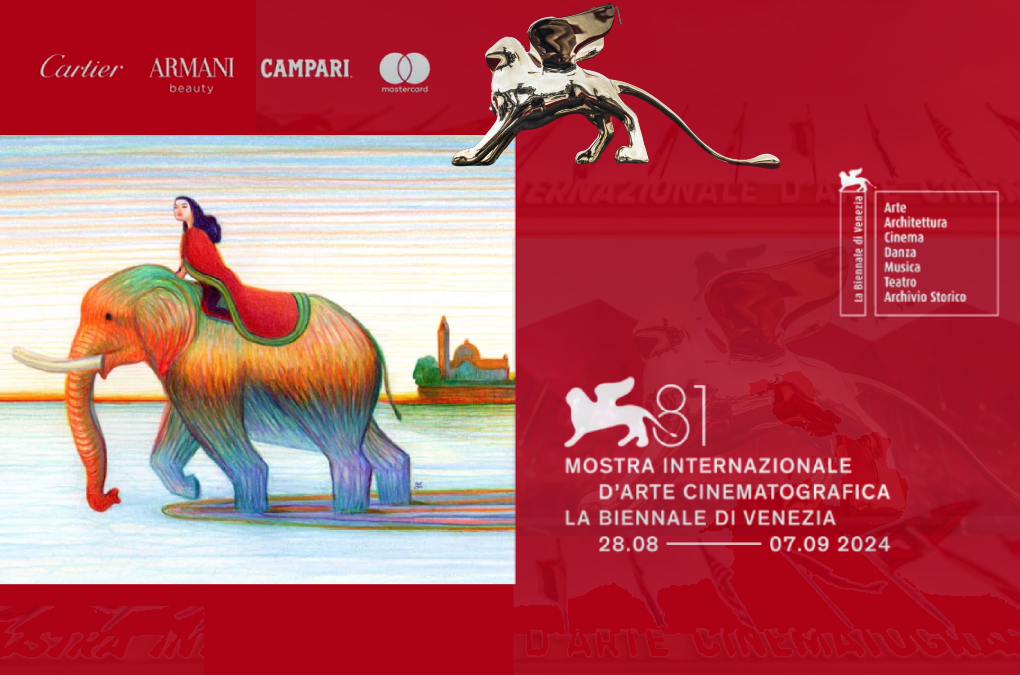
The festival poster depicts an elephant. It is stepping heavily through the waters of the lagoon, and on its back sits a girl in a red dress. A real elephant could be seen on the narrow Venetian streets during the 1981 Biennale. The image also evokes the liners that could still be seen in the lagoon not long ago. Every morning, they brought thousands of day-trippers and felt like elephants in a china shop. Venetians actively protested against the entry of large ships into the city’s waters and finally achieved their goal.

Mattotti explains his unusual choice: “What is an elephant doing in the Lagoon? It’s an unexpected image, but it takes us back to 1981, when an elephant wandered through Venice during a famous Biennale Carnival. This elephant now crosses the Lagoon, symbolizing the journey into fantasy, mystery, and magic that cinema offers. It embodies the history of cinema itself: a celebration, a parade, a spectacle.”

He continues: “This specially-coloured elephant also evokes the exotic, the faraway, the East, a look towards other civilizations and cultures. For 92 years, the Venice Mostra has brought together different worlds, languages, and fantasies, all converging in the Lagoon. This elephant, facing the East, welcomes everyone.”

The author of the poster is Italian artist, screenwriter, director, and comic book author Lorenzo Mattotti. His career spans comics, illustration, animation, and film. He is known for his distinctive style and his ability to blend storytelling with visual artistry. His works have been exhibited in prestigious venues worldwide and have earned him numerous awards. His animated film “The Famous Invasion of the Bears in Sicily” competed in the “Un Certain Regard” section of the 2019 Cannes Film Festival.

21st August 2024 0 comment
0 FacebookTwitterPinterestLinkedinRedditTelegramSkypeViberEmail
Load More Posts

TechvangArt

TechvangArt

About us

  • About us
  • Our Ecosystem
  • Collaborate with Us

Privacy Policy

  • Rules and Principles
  • Legal
  • Twitter
  • Instagram
  • Linkedin
  • Youtube
  • Email
  • WordPress

@2023 - TechwangArt. All Rights Reserved.

TechvangArt
  • Art
  • Dialogues
  • OpportunitArt
  • Science and Art
  • Tech
TechvangArt
  • Futurist WorkoScope
  • Business
  • TVA Lab
    • If A Little Star….
    • TextStyle Apothecary
  • NewsMeme