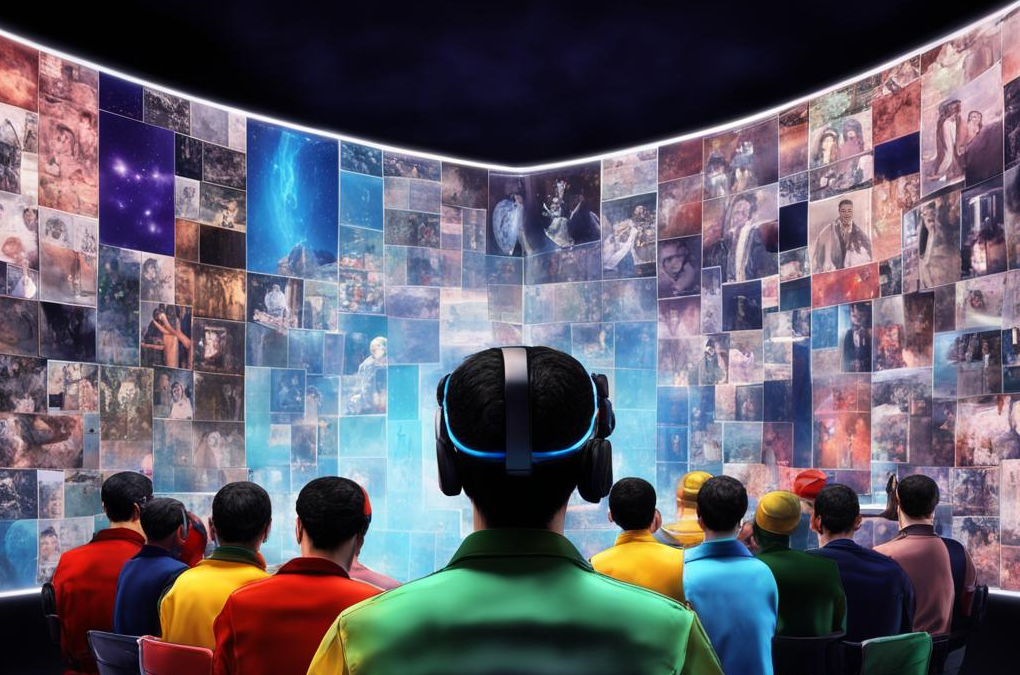
Welcome to the new classroom of the future, where innovation and technology come together to create a dynamic learning environment.
As pioneers in the field of XR, STYLY is leading the way in cultivating the next generation of creators who will revolutionize the learning experience for generations to come shaping the way we educate and inspire the next generation of creators.
But with this exciting evolution comes important questions about how to effectively and ethically incorporate immersive technology into the process of learning?
For those who wonder when and where it was the beginning of this story that kicked off the changes in education
Please follow the news that caught our attention
 | STYLY, Inc. has been selected as the host for the immersive field course at Harvard Business School. By joining forces with Harvard Business School’s Immersive Field Course (IFC) in Tokyo, STYLY aims to reshape the way education is shared, embracing an immersive system that seamlessly aligns with the demands of the 21st century. Please read more in the STYLY official page |
Following this TechvangArt together with STYLY, will explore the end in the same time endless of possibilities of Immersive Technology in Education and how it can empower students, but also the teachers to thrive in an ever-evolving world.
Imagine stepping into a virtual world where history comes to life, science experiments are conducted in a simulated lab, and literature discussions take place in a captivating setting. The potential for learning and exploration knows no bounds in the classroom of tomorrow, and with STYLE leading the way, the future of education is truly an exciting and limitless adventure.
-So, Welcome to the classroom of tomorrow –
Welcome to the future of learning – where innovation is at the forefront and the possibilities are endless
TVA: From your perspective, what is the future outlook for immersive technology in education, and how can it potentially revolutionize the learning experience?
STYLY: In education, XR will become a crucial means for companies, governments, and individuals to fully cultivate the essential skills needed to adapt to the cultural and industrial changes that will occur in the future.
It is said that by 2030 and beyond, a lifestyle centred around spatial computing, where people live their lives constantly wearing MR glasses, will become commonplace worldwide.
65% of children entering elementary school today will end up working in jobs that do not yet exist. This underscores the increasing importance of the ability to predict and prepare for the future needs of the workforce, the nature of jobs, and the overall impact on employment.
From its inception, STYLY has emphasized the significance of XR creators capable of crafting spaces as a vital skill for the era of spatial computing, dedicating efforts to nurture XR creators.
TVA: Can you give an example of how immersive technology has been successfully implemented in an educational setting?
STYLY: “Beyond the confines of schools, we are working on the implementation of XR in educational settings through initiatives with local governments and location-based projects.
Creative Thinking by STYLY and a comprehensive XR curriculum for educational institution

We have provided a comprehensive XR curriculum for educational institutions aimed at nurturing creative thinking, “Creative Thinking by STYLY,” to sister schools nationwide, including Tokyo Communication Arts College. Through this curriculum, we jointly foster the next generation of talent capable of creative thinking and action, covering logical thinking, ideation methods, and technical skills in an integrated manner.
In Niigata City, we leveraged this educational know-how to cultivate local XR creators, providing opportunities for sustainable engagement in the XR industry and the creation of local XR-based industries.
To make XR accessible to children without specialized knowledge, we collaborated with the JR West Group to launch initiatives such as “AR Drawing Art” and an “AR Stamp Rally” that can be enjoyed on train journeys.
With the advancement of AI technology and the introduction of a basic income, there is a growing movement towards freeing people from menial tasks, highlighting the urgent need for developing talents capable of creative thinking and action. In response to these times, our company is committed to nurturing creative and practically skilled individuals through this curriculum.

TVA: In your opinion, how can immersive technology bridge the gap between theoretical knowledge and practical application in the educational system?
STYLY: “We believe in the necessity of creating and experiencing spaces. The gap between theoretical knowledge and practical application in the educational system cannot solely be bridged by technology. By utilizing the skill of spatial cognition and the features of XR, we can spawn new ideas and nurture creative thinking.
- Project-based learning with STYLY enables learner to take a comprehensive approach to both the creation and experience of spaces. Our curriculum is intentionally designed to shift the perception of things from flat to spatial, thereby cultivating novel ideas and perspectives.
- Students learn to utilize XR (AR/MR/VR) for self-expression and problem-solving. By actually experiencing these technologies, they engage in a cycle of creation and experience that brings them closer to practical application.
Moreover, it’s crucial for us to collaborate with educational institutions to ensure that the abilities developed through this creation and experience lead to employment opportunities.”
For more information about STYLY, Read also:
Shifting Perspectives: A New Approach to Problem-Solving
TVA: “What role do you see immersive experiences playing in fostering creativity and critical thinking among students?”
STYLY: “We believe it centres around a problem-solving approach based on “experience.”
While the general process of problem-solving involves designing experiences starting from what we wish to realize, the shift from information input and output through PCs and smartphones to spaces necessitates an approach where we consider what can be realized based on experience design.
It involves designing while contemplating what kind of experiences can be created in that space, quickly constructing the designed space, experiencing it, and then making improvements. Instead of identifying problem factors and proposing solutions at a desk, “”space”” becomes the field for proposals. XR is the most suitable means for problem-solving centered on experiences.”
A Path to Inclusivity: Challenges and Solutions

TVA: “Could you share any challenges or limitations that immersive technology may face in terms of widespread adoption in the educational system?”
STYLY: “With the expansion of the market, disparities in information access and a shortage of development resources can be anticipated.
- Digital divide would be a challenge for educators as there might be the gap between those who can afford XR devices and those who cannot. While technological advancements may benefit some individuals, they can also leave others behind.
- Moreover, from the educators’ perspective, there is a challenge in the lack of instructors and facilitators capable of effectively applying XR technology for educational methods such as Problem-Based Learning (PBL). This shortage can become a barrier to integrating new technologies into educational settings.
In response, STYLY aims to prepare the necessary environment, including devices, and then “discover,” “nurture,” and “professionalize” individuals, thereby increasing the number of educators who can contribute to the field in the future.”
TVA: Are there any considerations or precautions that need to be taken when incorporating immersive technology into the curriculum?
STYLY: “The goal should not be simply acquiring the technology itself.
We believe that students need to learn not just how to program or operate tools, but how to apply this knowledge to solve real problems and engage in creative tasks.
Asking “What do we want to create?” allows learners to explore their own interests and passions, serving as a guide when they embark on actual projects or problem-solving tasks. Through this approach, immersive technology becomes more than just an educational tool; it serves as a crucial means of nurturing our creativity and critical thinking skills.
STYLY supports us in designing, executing, and actually experiencing what we aim to achieve with technology as a tool, thereby fostering a self-driven movement towards improvement.”


About the Spatial Layer Platform ‘STYLY’
STYLY is a spatial layer platform for the “Spatial Computing” era, bridging digital and physical realms. It enables the creation and distribution of digital content targeting both public layers in urban spaces and facilities and personal layers around the individual.
STYLY have a global community of over 100,000 creators, with more than 200,000 digital contents distributed. It offers a diverse range of digital content, including art, music, fashion, and videos, submitted by creators worldwide. These digital contents can be enjoyed alone or shared and experienced with friends, making it a versatile platform for various digital experiences.
The mission is ‘Free Inner Creativity,’ dedicated to unleashing the creative and innovative potential in individuals and enterprises through XR technology. This initiative contributes to the evolution of humanity by fostering new cultures and industries. Through the provision of the spatial layer platform “STYLY,” the company is transforming spatial information layers into media, thereby creating the era of “Spatial Computing” where cultural and industrial activities take place within these newly defined spatial dimensions.
STYLY Official Site: : https://styly.inc/