
GatherVerse consists of a series of virtual events that attract impressive line-up speakers from all over the world; the community around it is impressive and has grown organically. What is their story, how was it possible to build such a vibrant ecosystem? We have talked with Christopher Lafayette, an international speaker on emerging technologies and humanitarian, and he is involved in numerous advisory Boards. He is the founder of the incredible ecosystem GatherVerse and he told us that he had the desire to build a platform within the ecosystem of business and technology, that is based on human-centricity, being a firm believer that the Metaverse, at his heart of it, is community.
Christopher Lafayette is also an advisor for many startups, he advised over 1000 startup leaders, many of them who have build incredible companies. But, also as an artist, as a creative, as a filmmaker as a designer, the intersection of Liberal Arts and Technology has been dramatically important in his career. So, we though he is the perfect candidate to talk about community building and ecosystem building around GatherVerse, the future of artists in a rapidly shifting technological world, but also we have found out what is the MUST-MUST-MUST-Have things that Christopher Lafayette will ask a Magical Genie that pops-out of his VR headset to fulfill his wishes 🙂 So, stay with TechvangArt, because we also found out about his New Book, New Investment Fund – GatherVerse Venture, and his plan to grow and transform into a New Media Platform
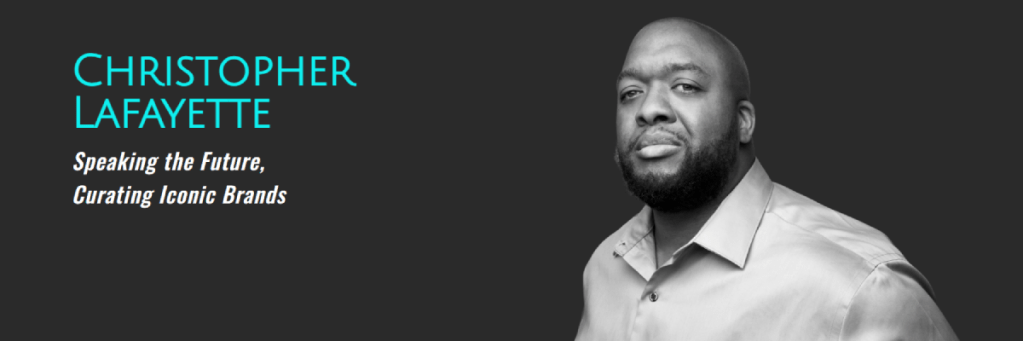
 TVA: A little bit of Story related to GatherVerse -how did you started it because it is an incredible community?
 Christopher Lafayette: Back in 2021, I came up with the seven standards of the metaverse which dealt with humanity first, Accessibility, Education, Equality, Community Development, Safety & Privacy, Wellness. And now, we have also Ethics – it was added later by Isabel de Peuter-Rutten, president of Euromersive)

At that time, Tony Parisi came up with the 7 rules of the Metaverse and I said well, if he can come up with rules – for which he is certainly qualified to do so – to me what matters more beyond technology is its people for whom we’ve been innovating for in the first place. We talk about technology and technical development and products, but we have to remember for whom we build the products in the first place.
And so I created these standards, and I chose a simple template that I liked, and put them out there and I didn’t know what would happen. Let’s see. And it took off. People were mentioning it in different talks all over the world within days, and weeks, so I said, ‘You know what? Let’s make one event. Just one. One event around the seven standards. I’m going to call it GatherVerse”. Initially, we thought of having 20 speakers to come talk about the seven standards at the intersection of technology. And then we’ll invite people and maybe we’ll get about 400 people – I’ve had events before where I’ve had a lot of people come up. And, then we build a website, a banner. Let’s just build it and just make it just for this one event”. I announced it in November – December 2021. And by the beginning of January we had almost 100 speakers.

The very first sponsor that we had was the Women’s XR Fund – and that was a really big deal for us. Because they were the first ones to support us financially to help even put this together. And that meant so much to me. And it was so impactful that these group of women leaders said ‘we’re gonna support you’. And then others did too.
But by the time, even before the event started, I knew that GatherVerse had become a brand. In the beginning, I had no intent for GatherVerse of becoming to that degree, what has become today.

At that very first event, we had so many people, we extended from three days to four days. We didn’t want to deny anyone and we didn’t want to charge anyone money – there’s so many events out there that cost money, which is fine because there’s a lot that you have to do to put together an event, especially at physical events. But I knew that we have become more virtual, and so I saw the opportunity and I said let’s democratize access. So, we said “No money. We don’t want your money. All we ask for is something that’s more precious: It’s time!” And we had over 10,000 people that showed up from around the world. And, for us, we realized that we couldn’t stop, we had more to do.

And we just concluded our 20th global summit and we never charged a single person anything but we always want to make sure that what we present is a premium platform where we hold the highest standards for ourselves, that all of our speakers that come are giving us a sense of trust. And we take that trust very seriously and the community and we don’t operate from a Western lens or Silicon Valley lens, but from a global lens and from a place of compassion and care with great considerations for the art community.

The success of GatherVerse isn't necessarily dependent on how many people show up, but how many people come and speak, how many voices are unlocked and amplified. And on the day that nobody shows up, and nobody else wants to speak, then we shut it down. It's served its purpose.
TVA: Definitely, it’s an impressive story and it’s amazing that it has grown so organically and that you could tackle the needs of different voices, and it is not just the usual ‘Western white boys club’. You did a lot of work and with a lot of success, but I think that it wasn’t always easy. If we are thinking of challenges and provocations, what were the difficult moments for you in building up this story?

Christopher Lafayette: That’s a really good question, and I appreciate you asking it because candidly…
1.The first difficult challenge is putting all these events together: we have to create the titles of the roundtables, of the firesides, place each speaker, we have to create the design of the cards, add all the information of the speaker on the card, upload and download info’s, we have to build the whole time entire website, so on…. It is just by grace and mercy, we are able to do it- but one of the reasons we’re also able to do it is that I was able to take myself on my team that we’ve been working together for years. As people may say, it’s just Christopher. There’s a team behind me and they do extraordinary work and we had that skill set to do all of this as artists and as creatives. This is what we’ve been doing and building brands for years. And to this day. People don’t know that about me – that I build a lot of brands to this day.

Most people can’t afford this, especially who does this as an event for free? All of that work. We now have AI tools that have shown up that have really been so helpful. That’s helped us to come up with more ideas and increase our workforce, so that we could produce even better streamed events.

2. Besides, this challenge of ‘doing the work’, the other challenge is listening to our audience and getting a sense of what they want. How do you scale GatherVerse? Because our focus is of three things: events, news, and storytelling – is social impact. Previous year, we had a two month beta to GatherVerse news, and we realized that people liked it and we want to do more of it.
3. But now you have to raise the capital to do it!

This past summer along with Impact Innovation Foundation, Euromersive, X/ergy , we launched the Human Capital Initiative, an ambitious $300 million fund that we’ve got, we set our commitment that three years to raise $300 million. And we’re working rather judiciously, people don’t see all that but working really hard – A lot of our community members have incredible startups at the intersection of human betterment and technology, but they have no money, no resources. And these platforms are necessary, whether it’s dealing with art, whether it’s dealing with climate, whether it’s dealing with climate tech agritech, whether it’s dealing with accessibility, ethics considerations, all of that they have they don’t have a lot of them don’t have the resources to do it. But these platforms are necessary to help sustain a more healthier ecosystem of technology.
And so we’ve put these things together as a hope to continue and to be able to help support and as we’re listening to our community, and we’re getting ready to roll out a series of podcast shows very soon. And we have a whole line-up of shows that we’re working on and have been for some time that we haven’t announced except for two, but we’re getting ready to have more.

4.And we’ve had people that are committed, so we have a volunteer workforce. But it’s so difficult to want to scale, to do things, but you can only do so much with what you have. Because people have to have an income- they have to have a roof over their head, food in their belly, to pay for the Wi Fi.

If we don’t create a platform that’s free with good information, how are all these people supposed to get this information that’s so cutting edge and so prevalent, if we consistently put a paywall there?
Some people might ask: how do you monetize? Well, a lot of this comes from my own resources. If people look around at platforms that are out there that typically give money to organizations and platforms, they’re dealing with layoffs- they don’t have a lot of money to share, they have profits, but a lot of these platforms have turned off their access to the community.
TVA: Indeed, it’s like that- it’s becoming harder and harder to monetize for small startups and content creators. Considering the context of rapid tech evolutions, and the fact that you have build so many things previously – companies, startups – I wanted to ask what is your next step? Maybe you partially answered and it is related to this Investment Fund that we talked previously…But, if it is also something else…
Christopher Lafayette: Let’s, put it out there candidly, I’ve had a lot of startups and I’ve got a lot of failures. And I’ve planted a lot of seeds and sometimes some seeds take longer to grow than others. And for me, what’s next is to continue very diligently very consistently with GatherVerse and we’re going to scale GatherVerse – I don’t want to call it a media empire- but we are scaling GatherVerse to new media and to become a platform.
It’s really important for people to understand – if you listen to your audience, they will tell you what they want from you. I have put out startups that I thought were ground-breaking, game changing and nobody wanted it. I barely put out GatherVerse, and many people wanted it.

One: GatherVerse was built from my heart. Some of the start-ups I’ve had were built from business consideration, and how to monetise it – but, GatherVerse – this was really from my heart saying, we need to take humanity-first into consideration when it comes to technology. And the idea takes off. People know, they see, they hear it, they feel it.
As we, as founders and entrepreneurs, we come out and say: “me, me, me, me me!”. But what if you can take you as an influencer and go out there and help amplify others that can have influence?
Because there are incredible founders and incredible platforms that are subjected to social media algorithms and marketing, and nobody knows who they are.
Because they don’t have a market, and if they don’t pay to play, you will never hear from them.
I don’t think that’s right. I don’t think that’s fair for them that are working so hard with what they do. And you don’t even know they exist. And there’s a tribe out there of people that want to know them.
So, GatherVerse amplifies them!
So that’s why we’re going to be doing more shows, that’s why we’re gonna be doing more summits! That’s where we’re going to tell news and social impact. And we’ll do it the best way we can.
I’ve dedicated the rest of my career to this work at the intersection of emerging technologies and humanity. I have a book that I’m getting ready to release and announce. And I haven’t announced that publicly barely.
But the name of my book is called “Surviving in Silicon Valley”. And I’ve been writing it since 2016.
So, those are some of the things that are next for me to Expand GatherVerse: GatherVerse Entertainment, GatherVerse Coalition and… MORE!
TVA: Really looking forward to your book, I’m curious about it! And because you have a background in art , filmmaking and design, but also you are the entrepreneur and ecosystem builder, so you have all these facets – how do you see the entertainment and the cultural and creative field evolving with XR and in the landscape of changing technologies?
Christopher Lafayette: With generative AI, generated pretrained Transformers, the Entertainment Industry and several other industries are already being impacted. Soon we’ll have AGI capability where I believe that we’ll have humans competing with AI, but also humans working with AI as a human in the loop intersection; or collaborative decision making an ethical balance between the relationship between humans and AI with the consideration of emotional and social learning, a framework I’ve been working on.
The reason that this question is so good is because humanity is being pressed into a higher level of creativity. Because AI gets its inspiration from humanity. And it can only produce what humanity is able to come up with. Until the day that AI has a higher form of intelligencia where it can be able to produce things that we’ve never even considered or that we’ve seen.
Because it now has the capability to be able to tap into levels of creativity that have amalgamated in that are paired together with consideration of music composition, designs, aesthetics, typography, storytelling narrative with all the data that’s out there. If we have data out there that exposes us and lets us know because of different points of view and different types of media consumption. It knows what we like and it knows how to create and build on top of that. Now when you take XR – which is the interface of AI – all of a sudden in hyper realistic, immersive simulated environments, these AIs that we’re typing into and that we’re talking to on our phones will be talking with AIs face to face.
Dr. Tom Furness, one of the pioneers of XR, and one of the most brilliant minds in the world of XR, often talks about unlocking the minds of people and forging connections between minds, and be able to build what’s in their minds. And now to be able to have AI build that we don’t know what that looks like. We’ve never been this way before but the tools are there.
And all that we’ve seen to this day of XR is nothing in comparison to what it will become. Even with the consideration of novels that have been written, even with the consideration of the OASIS – Ontologically Anthropocentric Sensory Immersive Simulation, even with consideration of Neal Stephenson – The Metaverse, or with Gene Roddenberry’s Holodeck, we will see things we’ve never considered before even in the in the annals of time of novel.
My consideration is with entertainment, and media, new media democratized access, where we can create incredible stories and film…
Who will have the capability of creating the stories?
To whom does it serve and to what benefit is yield and given in these stories?
And more importantly, the information that is expressed through the stories?
Is it misinformation? Is it disinformation? Is it authentic? Is it natively found? Is it real?
And when it comes to art and creativity -I’ve always said that you can have art without technology but you cannot have technology without art – Who cares for our artist?

We must have the consideration of universal basic income and universal basic services if our artist came into this world on a career path, and we said that you can monetize this. And now that you’re here, we have AI doing your job and you can no longer monetize it. We have to take care of our artists. We have to give some type of funding and be able to have reintroduction programmes or something for them to be able to sustain.
We must understand that the adoption level of GPT is only about globally 29%. We haven’t begun to see the ramifications when it comes to AI. But we must take care of the ones that are going to be impacted by it. That’s the universal basic income deal.
TVA: I’m happy that you’ve touched on this subject because so many artists, creatives- and not only them – are worried about AI taking over jobs and skill, and definitely we have to do something if we consider that technology is for humanity, and not replacing humanity. But, do you consider it is the right mindset and skill for individual to successfully navigate this tumultuous age that will come?

Christopher Lafayette: My suggestion to industry is do not run from AI. Do not be scared of it. Don’t abstain from it. Use it. Take advantage of it. Stay ahead of it. Don’t slow down, accelerate. I had said years ago what happens when the technology becomes more advanced than the technologist. This has now come. We must take advantage as artists, creators, storytellers and filmmakers and designers, and sculptors to be able to understand how we take AI to accelerate, into expanding what we already do?
There are no more books for us to open and read to tell us the way forward. We must now write the books. When we go into the forest, there was already a path and the light was on. And we walked in our careers as children and we came as adults, and we walked on this path. But now in the forest, we’ve gotten to the place where we come right on the edge and there’s no more path. There’s bushes and brambles and trees. And we have to create and clear the path. And when we do that, we have to leave the light on for others to come behind us just as somebody did for us. This is where we’re at; we don’t know the answer. And we do know the approach in which way to move forward. And this is why we have GatherVerse to openly express what we’re seeing in real time, as reliable and hopefully good information so that people can be able to move forward in this new era of technology.
TVA: Okay, coming back a little bit of what you said in the beginning, that you are advising to lots of companies, and I saw that you are on the boards of diverse Foundation and Companies, such as Google, Meta or Velux Foundation, etc But, I could not notice that you are advising also the European Commission – being an European, I wanted to ask how is that going? 🙂
Christopher Lafayette: I have advised the European Commission, and I remember sitting in Mestre, Italy at – I was the only American at a round table discussion – and the European Commission asked me: What do you consider our strength and our weakness? And my answer was: The strength of Europe when it comes to technical development is your heritage. You know how to build incredible things. You’re some of the very best builders of the world. Certainly not what we’ve been able to do in a lot of ways here in North America.
I said your weaknesses, your complacency. You do not give enough support to your start up culture or community of technologists and artists. You do not support them as much as you should.
>There’s not enough support.
>There’s not enough resources.
>There’s not enough 5G.
>There’s not enough Wi Fi.
>There’s not enough speed connectivity.
There’s not enough!
Because many in Europe, when it comes to the Commission, they want to support cinema, which is fine, but they want to support older things.
Hospitality, for example, the local communities and the service industry in that regard when it comes to tourism, because you have generations that’s what they’ve built, and they’re some of the best in the world.
Europe is the best in the world for this. But you have another generation that says we want to innovate, to build and scale with technology – and so there’s been this clash.
TVA: I don’t think they listen to you – you have to lobby more :))))
Christopher Lafayette: We have many people in our community that are part of the European ecosystem. And we’re getting ready to do a lot more with GatherVerse in the European ecosystem. Because those relationships mean so much to us. We’re so inspired by what we see happening in Europe.() When you translate that into technology, can you imagine if you just had access and even more resources and funds to be able to transfer the delicious dishes of what we eat and what we taste and the different sites? I could see it.
TVA: but sometimes the European Commission is slow…
As we have become accustomed at the end of the interview, TECHVANGART asked some SHOT-Crazy Questions

TVA: If you had the ability to create an XR experience that would allow people to step into the shoes of historical figures, who would you choose and why?Christopher Lafayette: If I had to take into the consideration art, I would probably say Julia Morgan who’s an incredible architect, one of the most brilliant of this world and at a time where you did not see so many women that were that were architectures – but she built the Hearst Castle and others. She is really the creative at the intersection of art and architecture.

| Julia Morgan (1872–1957) was a woman of many firsts: one of the first female engineering majors at the University of California, Berkeley, the first woman to pass the entrance exam in architecture for the École Nationale Supérieure des Beaux-Arts (and the school’s first female graduate), and the first licensed woman architect in California. (MORE) https://pioneeringwomen.bwaf.org/ |
TVA: A book that deeply influenced youChristopher Lafayette: Cormac McCarthy – The Road

He wrote a book about a father and his son walking through a ravaged post apocalyptic world and it was simply just walking down a road surviving, escaping dangerous and being together, but knowing that the father would leave and he would have to pass on to the child the fire. And he says: “you have to carry the fire now, you have to be able to, to go forward!”. It’s a very powerful, very powerful story – there could also be at a very dark hour, but there could be light on the other side.
TVA: Let’s imagine that a Genie pops out of your VR headsets, and he tells you: “I offer you 3 wishes, but you have to tell three wishes in less than one minute”. What would be the three wishes?Christopher Lafayette: I would tell….. that… Genie “thank you, but no thank you”.
TVA: Really? Why?
Christopher Lafayette: Because I have everything that I want! I’d never been happier, than I am today. And all that’s been given by the Grace of God. I have everything within my heart and mind now – I’m very completely content, satisfied, I don’t want to ask for more than what I already have. I’ll have what I’m supposed to get. And so the wishes, The genie could keep that – why to wish more than what I’ve already been blessed with? So instead of me wishing for more, why should not have appreciation for what I already have?

“All photographs and photo are subject to copyright and intended solely for press utilization, exclusively for news reporting or editorial coverage.
